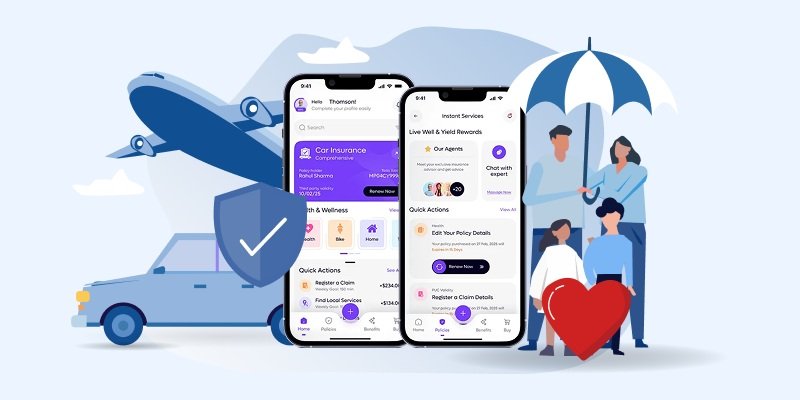

Strip insurance down to its core, and you are buying a single promise. When something goes wrong, the money shows up, and it shows up fast. For years, that promise fell apart at exactly the point it mattered: the claim. Reams of forms. Documents to submit in person. Branch visits. Weeks of waiting while you were already dealing with a crisis. The claim became a second emergency layered on top of the first.
That has genuinely shifted in 2026. The better insurance apps now clear certain claims in hours, not weeks.
Still, “instant claims” is a phrase that rewards a closer look. Not every claim can be instant. Not every app lives up to its own advertising. And more often than people expect, it is the fine print, not the app, that decides whether your claim sails through or stalls. Picking the right insurance app comes down to three things: knowing what actually makes claims fast, knowing which features earn their keep, and knowing what to read before you hand over your money.
What “Instant Claims” Really Means?
The word “instant” sounds absolute. In practice, it applies to particular kinds of claims, under particular conditions, and getting clear on that upfront saves you a nasty surprise later.
Small, clean claims genuinely can settle fast. A cashless health claim at a network hospital, a minor motor claim, a simple reimbursement, these move quickly through automated processing when the paperwork is clear, and the claim sits comfortably inside the policy terms. Big or complicated claims are a different story. A major hospitalisation, a vehicle written off, a death claim on a term plan, these take longer because the insurer has to verify the details before releasing a large sum. That is not the app being slow; that is due diligence on money that matters.
So treat “instant” as the best case for eligible claims, not a blanket guarantee. The honest apps make that distinction clear, and knowing it keeps your expectations grounded.
What Actually Makes Claims Fast?
Speed is not luck. It comes from specific machinery running in the background, and knowing what that machinery is helps you tell the real performers from the ones just saying the right words.
- Digital documents and upload. Physical paperwork was always the biggest drag. Apps that let you upload claim documents directly and hold your policy details digitally wipe out that delay.
- Automated assessment. For eligible claims, software can assess and approve without a human queue in the way. This is the actual engine behind hours-not-weeks settlement.
- Cashless network integration. In health cover, an app tied into a broad hospital network means the insurer settles directly with the hospital and you pay nothing at the counter. It is the fastest, least stressful version of a claim there is.
- Live claim tracking. Seeing precisely where your claim stands, stage by stage, kills the uncertainty and lets you jump on anything the insurer needs the moment it comes up.
Put all four together, and an app can genuinely deliver on the fast-claim promise. Leave one out, and it will lag, no matter how the marketing reads.
Features That Matter Beyond Speed
Quick claims are the headline, but the best insurance app in 2026 has to earn its place across the entire life of your policy, not just the day you claim.
Look for a single view of everything you hold: all your policies in one place, with renewal dates, coverage, and documents together instead of scattered across apps and drawers. Renewals deserve real attention here, because a missed renewal means a lapsed policy, and a lapsed policy means no cover at all. An app that nudges you before the due date and lets you renew in a few taps is quietly protecting you. That matters most on health and term plans, where a lapse can cost you accumulated benefits or drop you back into fresh waiting periods.
A few more features carry weight. The app should let you read your full policy terms, coverage, exclusions, and waiting periods, so you know what you hold before you ever need it. Support should be easy to reach when a claim gets complicated. And document storage, keeping your policy papers, ID, and claim records in one accessible spot, means you are never hunting for paperwork in the middle of an emergency.
The Fine Print That Decides Your Claim
Here is the part almost everyone skips, and it is frequently the part that decides whether a claim is paid fast, paid slowly, or refused outright. No app, however slick, can pay a claim that falls outside the policy. Reading the fine print before you buy is what actually protects you.
Watch these closely:
- Waiting periods. Health policies hold waiting periods, often for pre-existing conditions and certain illnesses, during which claims for those conditions simply are not payable. Buying through an app does nothing to remove them, so know them going in.
- Exclusions. Every policy spells out what it will not cover. A claim for an excluded event gets rejected regardless of how good the app is. Read the list so nothing blindsides you.
- Sub-limits and co-payment. Some health plans cap what they will pay for specific treatments, or make you cover a percentage yourself. Both change how much actually reaches you.
- Disclosure. The single most common reason claims get rejected is non-disclosure: not declaring an existing condition, a habit, or some other material fact when buying. Honest disclosure at purchase is what keeps your claim valid later. The app makes buying effortless, but the honesty is on you.
- Documentation. Know what papers a claim will call for, so you can hand them over without scrambling when the moment arrives.
Think of it this way. The app decides how smoothly you deal with your insurer. The fine print decides whether the claim is valid in the first place. Both count, and the second one is entirely in your hands the day you buy.
Comparing Plans on a Marketplace App
One of the genuinely useful shifts in 2026 is the insurance marketplace app, which lets you line up plans from several insurers side by side before committing. Instead of being boxed into one company’s shelf, you weigh coverage, premiums, features, and terms across the field.
The Bajaj Finserv app works this way. It functions as an insurance marketplace, offering plans from partner insurers across health, motor, term, and other categories. It is a distribution platform, not an insurer in its own right, which means it connects you to policies from established insurance companies, then lets you compare them, buy them digitally, keep them in one place, and reach support when you need it. Whatever marketplace you use, look past the premium alone. Check the claim settlement record of the insurer actually underwriting the policy, the coverage, and the fine print, because those, not the storefront, shape what happens when you claim.
How to Choose the Right App
Pulling it together, here is what to weigh when you want an app that pays claims fast and reliably:
Start with the insurer’s claim settlement ratio, not the app’s speed pitch, because a high ratio tells you the insurer genuinely pays out. Confirm the app supports digital claim filing, document upload, and live tracking. If it is health cover, check the cashless network is wide and actually includes hospitals near you. Make sure you can read the full policy terms, waiting periods and exclusions included before you buy. And check that renewals are simple, so your cover never quietly lapses.
An app that clears all of those gives you both halves of what you need: the speed, and the reliability underneath it.
The Bottom Line
The best insurance app for instant claims in 2026 pairs real speed on eligible claims with the features and transparency that keep a policy dependable for its whole life. Fast settlement is genuine for clean claims, built on digital documents, automated assessment, cashless networks, and live tracking. Bigger claims still need verification, and nothing the app does can pay out on something the policy excludes.
Which is exactly why the fine print carries as much weight as the speed. Read the waiting periods, exclusions, sub-limits, and disclosure rules before you buy, and disclose honestly, because that honesty at purchase is what safeguards the claim later.
Use a marketplace app like Bajaj Finserv to compare plans across insurers, check the settlement record of whoever underwrites the one you pick, and settle on a policy whose terms you genuinely understand. A good insurance app makes claiming quick and painless. But it is the policy behind it, and how well you grasp its terms, that finally decides whether insurance keeps its one promise when everything else has gone wrong.